

Wise words on birth from the great Ariana Grande, “Just keep breathin‘ and breathin’ and breathin’ and breathin’ And oh, I gotta keep, keep on breathin’.”
It’s definitely easier said than done especially when you’re in the moment of trying to squeeze a tiny human out of your body, but it is oh so important if you’re looking to experience a natural childbirth whether in the hospital, birthing center or the comfort of your home.
You’re probably wondering why breathwork is so important and what exactly it can do for you. Well the benefits are endless, but here is the reasoning behind breathing and labor.
Benefits:
- Reduces pain. That is to say it reduces the perception of your pain because you are focusing on your breath rather than actual pain itself.
- Relaxation. Breathwork calms your nervous system down, and relieves stress and anxiety, which is understandable for those levels to rise as you begin to welcome your bundle of joy.
- Oxygenates your blood. Breathing exercises help you keep your oxygen levels up, which will provide more strength for you and your baby.
- Releases muscle tension. Pain causes your muscles to tense up, and focusing on your breath allows your muscles to relax and soften around those surges.
- Control. Breathwork can provide you a sense of balance and control over your well-being and your thoughts because you’re channeling them elsewhere.
The golden ticket to receiving the benefits of breathwork is patterned breathing, which is finding whatever breathing style that feels good to you, and continuously breathing at the same rate and depth. These are some of my favorite breathing techniques for you to try.
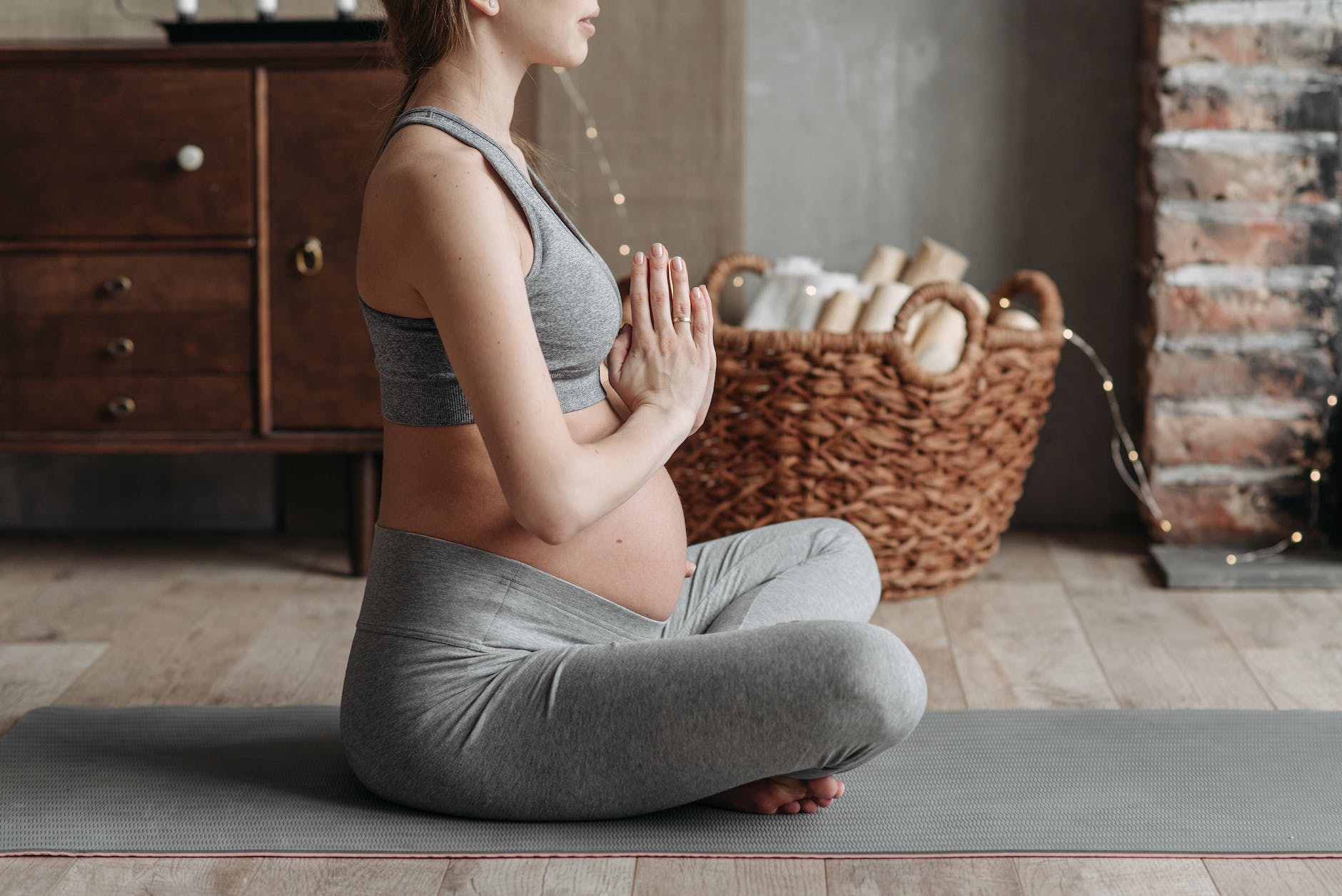
Breathing Styles:
- Ocean Breath – you can perform this style in reclined, sitting or standing positions. Just find somewhere comfortable.
- To establish your patterned breath, inhale through your nose and exhale out through your nose. You can continue with this for five-ten rounds.
- Alternate Nostril Breathing – begin this style in a seated position only.
- Using your right hand, place your thumb on the outside of your right nostril to close it.
- Inhale slowly through the left nostril. At the top of your inhale, place your ring finger on the outside of your left nostril to close it.
- Pause for a moment, and then take your thumb off your right nostril. Exhale through your right nostril.
- After your exhalation, inhale slowly through your right nostril, with your left nostril still blocked with your ring finger. At the top of this inhalation, close your right nostril with your thumb.
- Pause for a moment, and then take your ring finger off your left nostril to exhale through your left nostril. Again, inhale on the left, and then move on to the right.
- This is one round. Repeat this pattern between five to ten times.
- Three Part Breath – you should practice this style of breathing in a seated position.
- To begin on each inhale, fill the belly up with your breath. Expand your belly with air like a balloon.On each exhale, expel all the air out from the belly through your nose. Draw your navel back towards your spine to make sure that your belly is empty of air. Continue for five breaths. This is part one.
- On your next inhale, fill your belly up with air. Then when your belly is full, draw in a little more breath and let that air expand into your rib cage causing your ribs to widen apart. On your exhale, let the air go first from your rib cage, letting your ribs glide closer together, and then from your belly, drawing your navel back towards your spine. Repeat this deep breathing into your belly and rib cage for about five breaths. This is part two.
- On your next inhale, fill your belly and rib cage up with air. Then sip in just a little more air and let it fill your upper chest, all the way up to your collarbone, causing the area around your heart to expand and rise. On your exhale, let the breath go first from your upper chest, allowing your heart space to sink back down, then from your rib cage, letting your ribs glide closer together. Finally, let the air go from your belly, drawing your navel back towards your spine.
- Continue at your own pace, eventually coming to let the three parts of the breath happen smoothly without pausing.
- Humming Breath – a.k.a bee breath. It provides relief if you’re hot, which is bound to happen as you prepare for active labor. It also can improve your concentration.
- Sit in a comfortable position with a straight back. Gently close your eyes.
- Place your index fingers on your ears. There’s cartilage between your cheek and ear. Place your index fingers on this cartilage.
- Take a deep breath in, and as you exhale, make a humming sound like a bee, gently pressing the cartilage. You can keep the cartilage pressed, or press it in and out with your fingers.
- You can make a low-pitched sound, but it’s a good idea to make a high-pitched one for better results. Inhale again
- Continue the same pattern five to nine times.
- Cooling Breath – It’s exactly as it sounds. It helps you cool your body down.
- Find a comfortable seated position.
- Roll your tongue into a taco shape by curling the sides. Stick it out by 3/4-inch. Inhale through your mouth as if sipping air through a straw. Keep your chest open and feel the cool air through your chest and torso.
- Exhale gently through your nostrils to empty the lungs. With this, you have completed one round.
- You can continue for five-ten rounds as needed.
It’s ideal to practice a breathing exercise daily throughout pregnancy, but you’ll definitely want to keep these in your back pocket as you journey through motherhood. All of these styles are very calming and soothing, so as a new mom if you ever find yourself ready to go off like a gasket, on the verge of tears, or hide in the pantry, try using one of these instead. Allow your breath to be your guide, and just keep breathing.
 Zen Mama